
GUIDE 05 – AI-POWERED SEO SERIES
Optimize titles, meta descriptions, headings, images, and content structure at scale. Includes the signals that matter for both Google and AI search engines.
REGULARLY UPDATED
BULK OPTIMIZATION PROMPTS
On-Page Optimization Is Not What You Think
Most people think on-page SEO means writing a good title tag and meta description. That is about 20% of the picture. The other 80% – the part that actually differentiates average websites from great ones – includes contextual signals, internal linking strategy, structured data, content depth, and user experience signals.
This guide covers both layers: the base signals every page needs, and the critical signals that 90% of websites miss entirely.
Practitioner’s Note
“On-page optimization is like speaking the language search engines and LLMs understand. It is not only about what users see on a website. It is the code behind the page – how cleanly it is written, how deduplication is handled, how unbroken the code is. The best part? It is fully under your control. Unlike backlinks or social signals, which are unpredictable, on-page is something you own completely.” – Apurv Singh, Dream SEO Masterclass Session 4
The Two Layers of On-Page Signals
Critical Signals (Where Differentiation Lives)
● Internal linking architecture
● Contextual signals between pages
● Structured data / schema markup
● User experience signals (bounce rate, dwell time)
● Content depth and uniqueness
● Readability and content formatting
90% of websites miss these
Base Signals (The Foundation)
● Title tags
● Meta descriptions
● Heading hierarchy (H1/H2/H3)
● Image optimization (alt text, sizing)
● URL structure
● Video optimization
Important, but not the differentiator
Base Signals: The Quick-Reference Checklist
These are the fundamentals. If you are already doing SEO, you probably know most of this. AI makes it fast – you can optimize 50+ pages in one session with the right prompts.
| Element | Best Practice | AI Prompt Shortcut | Common Mistake |
|---|---|---|---|
| Title tag | 50-60 characters, primary keyword near the start, compelling to click | “Generate 5 title tag options for a page targeting {keyword}. Under 60 chars, keyword near start.” | Keyword stuffing, exceeding 60 chars, brand name first |
| Meta description | 120-160 characters, includes keyword, clear value proposition, call to action | “Write 3 meta descriptions for {page URL}. Under 155 chars, include {keyword}, end with a CTA.” | Duplicate across pages, no CTA, too long/short |
| H1 tag | One per page, includes primary keyword, different from title tag | “Suggest an H1 for a {page type} targeting {keyword}. Should complement, not duplicate, the title tag.” | Multiple H1s, same as title tag, missing keyword |
| H2/H3 structure | H2 for main sections, H3 for subsections. Include semantic keywords naturally. | “Suggest H2 and H3 heading structure for a 2000-word article about {topic}. Include related semantic keywords.” | Flat structure (all H2), headings that do not describe section content |
| Image alt text | Descriptive, includes keyword when relevant, under 125 characters | “Generate alt text for these {X} product images. Be descriptive, include {keyword} naturally.” | “image1.jpg,” keyword-stuffed alt text, missing alt entirely |
| URL structure | Short, readable, includes keyword, lowercase, hyphens not underscores | “Suggest clean URL slugs for these 10 pages: {list}. Keep under 5 words, include primary keyword.” | Long URLs with parameters, mixed case, dates in URL |
Bulk Optimization Prompt (Process 50+ Pages at Once)
Here is a list of pages on my website with their current title tags, meta descriptions, and H1 tags:
— paste spreadsheet data —
For each page, the target keyword is listed in column D.
Please:
1. Flag any title tags over 60 characters or missing the keyword
2. Flag any meta descriptions over 155 characters, missing keyword, or missing CTA
3. Flag any pages with duplicate titles or descriptions
4. Generate optimized versions for every flagged item
5. Output as a table I can hand to my team for implementation
Critical Signals: What Actually Moves the Needle
These are the on-page signals that separate page-1 rankings from page-3 obscurity. Most SEO projects never reach this level because they get stuck on the basics. With AI, you can implement all of these in a fraction of the time.
Contextual Signals Between Pages
When you add a new page, don’t just create it in isolation. Weave it into your existing content ecosystem. Ask: what content already exists on my site that relates to this new topic? How can I connect them?
For example, if you are adding a page about “protein powder for women,” you should also have content about benefits of protein, how to choose the right protein, whey vs plant protein. Each of these pages should link to each other contextually – not with “click here” or “read more,” but with natural keyword-rich anchor text embedded in the content.
AI Prompt: “I am adding a new page about {topic}. Here are my existing pages: {list URLs with titles}. Which existing pages should link to this new page, and what anchor text should I use? Also, what 2-3 sentences should I add to each existing page to create a natural contextual bridge?”
Internal Linking Best Practices
Target 3-8 contextual internal links per 1,000 words. Use the target keyword of the destination page as anchor text. Link from high-traffic pages to important business pages to pass SEO equity.
| Do This | Not This |
|---|---|
| “Our vitamin C serum for oily skin targets excess sebum…” | “Click here to see our product” |
| “The complete guide to keyword research covers this in depth” | “Read more about keywords” |
| Link from high-traffic blog to product page | Link product page to unrelated blog |
For a deeper internal linking strategy guide, see the AI-Powered SEO hub – Guide 07 on internal linking is coming soon.
Content Structure That Ranks in AI Overviews
Google AI Overviews and LLMs pull content in chunks. They cannot stitch together pieces from paragraph 1 and paragraph 10. They grab a self-contained block: a table, a bullet list, a definition paragraph, or an FAQ answer. Structure your content so these blocks exist.
| Page Element | Why It Matters for AI | Placement |
|---|---|---|
| Intro paragraph (pain point + solution) | Doubles your chances to appear in AI Overviews. Concise, self-contained answer. | First 2-3 sentences of the page |
| Table of contents | Helps Google show sitelinks and section-level results | After intro, before first section |
| Comparison tables | AI pulls structured data. Tables are one of the easiest formats to extract and cite. | Within relevant sections |
| Bullet point lists | Featured snippets and People Also Ask sections pull bulleted lists directly | Wherever listing items or steps |
| FAQ section | Maps directly to PAA boxes and AI question-answer queries. Add FAQ schema too. | Bottom of page, before footer |
| CTAs to product/service pages | Moves users from informational content to conversion pages | After every major section |
User Experience Signals Google Tracks
Google measures three user behavior metrics that directly influence rankings. These are tracked in Google Analytics 4 and reflected in your Search Console data.
| Metric | What It Measures | Good Benchmark | Red Flag |
|---|---|---|---|
| Bounce rate | % of visitors who leave without visiting a second page | Under 50% for product pages | Over 70% for product pages |
| Dwell time | How long visitors spend on the page before leaving | 30+ seconds for product, 60+ for blogs | Under 10 seconds |
| Pages per session | Average number of pages visited per session | 2-2.5 (4+ for strong e-commerce) | Under 1.5 |
If dwell time is under 10 seconds, users are getting the answer without engaging – and those searches will eventually move to AI chatbots entirely. The pages that survive are the ones that provide depth, perspective, and value that a quick AI answer cannot replicate.
Content Depth and Uniqueness
This is the most important on-page signal in 2026. Google has made it clear through the Helpful Content updates: if your content does not add something unique – a perspective, original data, first-hand experience, expert analysis – it will lose rankings to content that does.
What “unique” actually means:
☑ First-hand case studies with real numbers
☑ Original research or proprietary data
☑ Expert opinion backed by experience (not just restating what others say)
☑ Unique frameworks, templates, or tools readers can use immediately
☑ Perspectives that challenge conventional wisdom with evidence
☐ NOT: rephrasing the same information that already exists on 100 other sites
AI Prompt for Content Audit: “Analyze this page content: {paste content}. Compare it against the current top 5 Google results for {target keyword}. What unique value does my page add that the competitors do not cover? What sections are generic and need a unique angle? Suggest specific improvements.”
Page Structures That Rank (Blog + Product)
Blog / Article Page Structure
1. Title (keyword-rich, compelling)
2. Intro paragraph (pain point + what you will solve)
3. Table of contents
4. H2 sections with semantic keywords
5. Visuals (images, infographics, charts)
6. Bullet points and tables within sections
7. CTAs after key sections
8. Internal links (3-8 per 1,000 words)
9. FAQ section with schema
10. Author bio with credentials
Product / Service Page Structure
1. Product name with primary keyword
2. Hero image (optimized, WebP, dimensions set)
3. Price, availability, ratings (with schema)
4. Short description (2-3 sentences, keyword-rich)
5. Feature table or spec comparison
6. Detailed description with use cases
7. Customer reviews / testimonials
8. Related products (internal links)
9. FAQ section
10. Trust signals (shipping, returns, security)
Go Beyond On-Page Basics
On-page optimization is one pillar of the complete SEO system. For the full framework covering intent mapping, technical SEO, content strategy, contextual signaling, and trust-building, explore the Dream SEO Masterclass.
Frequently Asked Questions
Can I optimize 50+ pages at once with AI?
Yes. Export your page data (titles, descriptions, H1s, target keywords) into a spreadsheet, paste it into Claude or ChatGPT, and use the bulk optimization prompt in this guide. AI will flag every issue and generate optimized versions in one session.
Does on-page SEO still matter with AI search?
More than ever. AI search engines use the same on-page signals – heading structure, content formatting, schema markup, entity clarity – to decide what content to cite. Well-structured, clearly organized content is easier for both Google and AI platforms to parse and reference.
What is the most impactful on-page change I can make today?
Add a concise intro paragraph (2-3 sentences) to your top 10 pages that directly states what the page covers and what problem it solves. This single change improves your chances of appearing in AI Overviews and featured snippets. Follow it by adding FAQ sections with schema to those same pages.
How important is content length?
Length alone does not determine ranking. A 1,000-word article that comprehensively answers a question will outrank a 3,000-word article padded with fluff. The goal is content completeness – cover the topic thoroughly without unnecessary filler. For competitive keywords, longer content (2,000+) tends to perform better because those topics genuinely require depth.
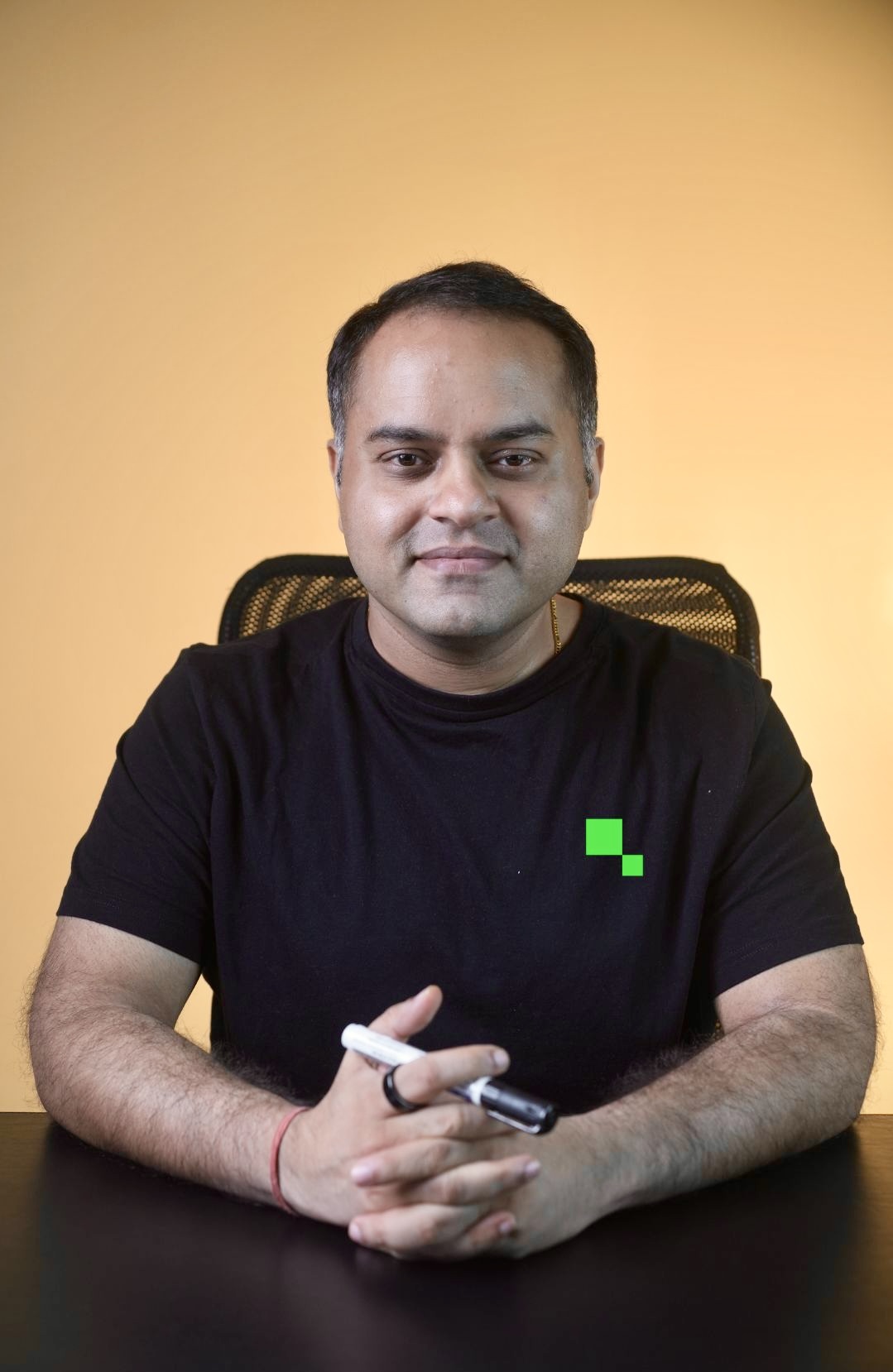
Apurv Singh
Growth Architect – HQ Digital
12+ years in digital marketing. Built SEO for a global top-10 traffic website and multiple marketplace platforms. Currently consulting for brands across India, UAE, US, and Europe – including Fortune 500 conglomerates, Reliance Brands, and D2C companies in fashion, jewelry, health, and real estate. TEDx speaker. 300K+ followers across Instagram and YouTube.