
GUIDE 04 – AI-POWERED SEO SERIES
AI-Powered Content Briefs
Analyze the top 10 SERPs, extract heading structures, identify content gaps, and build briefs that win before you write a single word. The difference between content that ranks and content that wastes time.
BEGINNER-FRIENDLY
REGULARLY UPDATED
COMPLETE BRIEF TEMPLATE
REGULARLY UPDATED
COMPLETE BRIEF TEMPLATE
Why Most Content Fails Before It Is Written
Give ChatGPT or Claude a title and ask it to write a blog post. You will get a perfectly grammatical, completely generic article that reads like the average of the internet. It will have the same structure, same subheadings, and same obvious points as every other AI-generated piece on that topic.
The problem is not the AI. The problem is what you give it. A title is not a brief. A brief is a structured document built from live SERP data that tells the writer (human or AI) exactly what is already ranking, what questions people are asking, what angle will differentiate, and what structure will win.
Content without a brief is a gamble. Content with a brief is a system.
Practitioner’s Note
“Give ChatGPT or Gemini or Claude a blank prompt and it will write you an article. It will write the same article for every other marketer who asked the same question. Same structure, same generic subheadings, same obvious points. The output reflects the average of the internet, which is, by definition, average. The fix is not a better prompt. The fix is a structured brief built from live SERP data.” – Apurv Singh
What a Content Brief Should Contain
| Brief Element | What It Does | Where to Get the Data |
|---|---|---|
| Target keyword + intent | Defines the primary topic and what the searcher wants | Keyword Research Guide |
| Top 10 SERP analysis | Shows what Google currently rewards for this query | Manual Google search or Semrush SERP analyzer |
| Heading structure map | Reveals the content architecture top pages use | AI extraction from top 5 ranking pages |
| Questions to answer | Ensures you cover what real users are asking | People Also Ask, Reddit, Quora, AlsoAsked.com |
| Content gaps | What top pages miss that you can cover better | AI comparison of top 5 pages vs your planned content |
| Unique angle | Your differentiator: first-hand data, expert perspective, original framework | Your experience, proprietary data, case studies |
| Target word count | Based on what is ranking, not a random number | Average word count of top 5 results |
| Internal link targets | Which existing pages this new content should link to and from | Your sitemap + contextual relevance mapping |
Step-by-Step: Build a Content Brief with AI
1
Analyze the Top 10 SERPs
Search your target keyword on Google. Open the top 5-10 organic results (skip ads). For each, note: the title tag, URL structure, content format (blog, listicle, comparison, product page), approximate word count, and whether they use images, videos, tables, or tools.
If you have Claude Pro, you can share the URLs directly and ask it to analyze them. For ChatGPT, copy-paste the page content (or use the browse feature if available).
SERP Analysis Prompt
I want to create a piece of content targeting the keyword: “{your keyword}”
Here are the top 5 ranking pages for this keyword:
1. {URL 1}
2. {URL 2}
3. {URL 3}
4. {URL 4}
5. {URL 5}
For each page, analyze:
– Content format (blog, listicle, comparison, guide)
– Approximate word count
– H2 and H3 heading structure
– Key topics and subtopics covered
– Content formats used (tables, images, videos, calculators, downloadable resources)
– What makes it rank (authority, depth, freshness, structure?)
Then summarize: what patterns do all top-ranking pages share? What do the top 3 do that the bottom 3 do not?
2
Extract Questions to Answer
The questions real people ask around your topic are the backbone of a strong content piece. They also map directly to People Also Ask boxes and AI chatbot queries.
| Source | How to Use It | What You Get |
|---|---|---|
| Google PAA | Search your keyword, expand all PAA boxes, keep clicking for more | 15-30 real questions people ask |
| Search “site:reddit.com {your keyword}” on Google | Unfiltered questions and frustrations from real users | |
| Quora | Search your topic on Quora, note top-voted questions | Questions with engagement signals (upvotes, answers) |
| AlsoAsked.com | Enter your keyword, get a tree of related questions | Visual map of question clusters around your topic |
AI Prompt: “Here are 20 questions people ask about {topic}: {paste questions}. Group them by theme. For each theme, identify the 3 most important questions that my content must answer. Rank themes by search intent: which themes have the highest commercial or transactional value?”
3
Define Your Unique Angle
This is where humans beat AI. Every top-ranking page covers the basics. Your job is to add something none of them have. This could be original data, a proprietary framework, a case study from your work, a contrarian perspective backed by evidence, or a tool/template the reader can use immediately.
Ask yourself:
● What do I know from first-hand experience that no competitor’s article mentions?
● What data or results can I share that prove my point?
● What framework or mental model have I developed that simplifies this topic?
● What common advice in this space is wrong, and what evidence do I have?
● What template, checklist, or tool can I include that makes this immediately actionable?
4
Build the Heading Structure
Based on your SERP analysis, question research, and unique angle, build the heading hierarchy. This is the skeleton of your content. Get this right and the writing (human or AI) becomes dramatically easier.
Heading Structure Prompt
Based on my SERP analysis and question research, create a detailed heading structure (H1, H2, H3) for a content piece targeting “{keyword}”.
Top-ranking pages use these H2 themes: {paste common themes from Step 1}
Questions people ask: {paste grouped questions from Step 2}
My unique angle: {describe your differentiator from Step 3}
Requirements:
– Include semantic keywords naturally in headings
– Start with a direct answer section (for AI Overview / featured snippet potential)
– Include a comparison or table section
– Include an FAQ section targeting PAA queries
– Place my unique angle as a dedicated section, not buried in a generic heading
– Suggest target word count for each section based on competitor depth
5
Compile the Final Brief
Combine everything into a single document your writer (or AI) can work from. A complete brief should fit on 1-2 pages and answer every question a writer would have before starting.
Final Brief Template Prompt
Create a complete content brief document for: “{keyword}”
Include these sections:
1. Target keyword and search intent (informational/commercial/transactional)
2. Target audience description
3. Content format and target word count
4. Complete heading structure with H1, H2, H3
5. Key points to cover under each heading (2-3 bullet points per section)
6. Questions to answer (from PAA and community research)
7. Unique angle and differentiation strategy
8. Competitor pages to outperform (top 3 URLs with their weaknesses)
9. Internal links to include (to and from this page)
10. Schema markup to implement (Article, FAQ)
11. Content formats to include (tables, images, videos, downloadable resources)
12. Review checklist before publishing
SERP analysis data: {paste from Step 1}
Question research: {paste from Step 2}
My unique angle: {describe from Step 3}
Heading structure: {paste from Step 4}
6
Brief to Draft to Published
The brief is your blueprint. The draft is built from it. Whether a human writes it or AI generates the first draft, the brief ensures the output is structured, complete, and differentiated.
| Stage | Who Does It | What to Check |
|---|---|---|
| Brief creation | SEO person + AI | Does it cover everything the top 5 cover, plus your unique angle? |
| First draft | Writer or AI (from brief) | Does it follow the heading structure? Is the unique angle prominent? |
| Human edit | Subject matter expert | Is the first-hand experience, data, and expert perspective woven in? |
| SEO polish | SEO person + AI | Internal links added? Schema implemented? FAQ section with markup? |
| Publish + distribute | Marketing team | Shared on social, email, community platforms for content dissemination |
The Pre-Publish Checklist
Before hitting publish, run through this checklist. Every item has a direct impact on whether the content ranks.
Content Quality
☑ Intro answers the core question in first 2-3 sentences
☑ All PAA questions addressed
☑ Unique angle is prominent, not buried
☑ Content depth matches or exceeds top competitors
☑ No fluff paragraphs that could be deleted without loss
☑ Author credentials and experience referenced
Technical SEO
☑ Title tag under 60 chars, keyword near start
☑ Meta description under 155 chars with CTA
☑ H1 contains primary keyword
☑ 3-8 internal links per 1,000 words
☑ Images have alt text and dimensions
☑ FAQ section with FAQPage schema
☑ Article schema with author markup
Learn the Complete Content System
Content briefs are one layer of the SEO content system. For the full framework – including content dissemination across channels, AEO optimization, and the intent-to-content mapping process – explore the Dream SEO Masterclass.
Frequently Asked Questions
How long does it take to create a content brief with AI?
About 15-20 minutes if you follow the steps in this guide. The SERP analysis (Step 1) takes the longest because you need to actually read the top-ranking pages. AI handles the heavy lifting of extracting patterns, grouping questions, and generating the brief structure.
Should I let AI write the content too, or just the brief?
AI is excellent for generating a first draft from a well-built brief. But the draft needs human editing to add first-hand experience, expert perspective, and brand voice. The best workflow: AI generates 80% of the draft, humans add the 20% that makes it unique and credible. Never publish an AI draft without human review and enhancement.
Do I need a separate brief for every blog post?
For your most important content pieces (targeting high-priority keywords), yes. For routine updates, shorter posts, or social content, a lightweight version of the brief is enough: target keyword, search intent, 3-5 key points to cover, and internal links. The full brief process is for content that needs to compete on page 1.
What if no existing content ranks well for my keyword?
That is actually a good sign – it means there is a content gap waiting to be filled. Skip the SERP analysis (there is nothing useful to analyze) and focus on question research (Steps 2-3). Build your brief around the questions people are asking and create the definitive resource for that topic. Being first with quality content is a significant advantage.
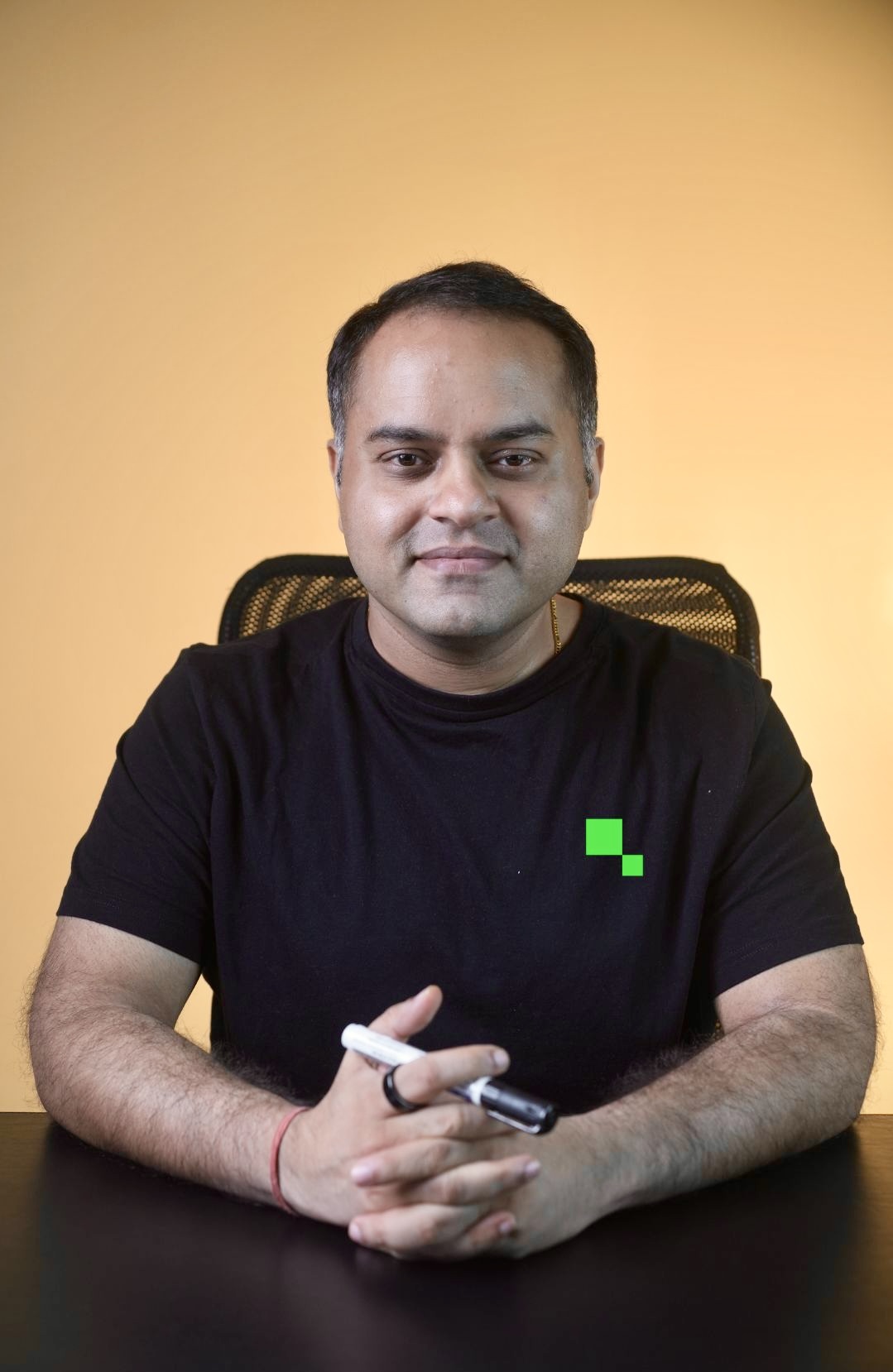
Apurv Singh
Growth Architect – HQ Digital
12+ years in digital marketing. Built SEO for a global top-10 traffic website and multiple marketplace platforms. Currently consulting for brands across India, UAE, US, and Europe – including Fortune 500 conglomerates, Reliance Brands, and D2C companies in fashion, jewelry, health, and real estate. TEDx speaker. 300K+ followers across Instagram and YouTube.