Performance marketing is a results-driven approach to digital advertising where you pay for outcomes, not impressions. This guide is built from 12 years of doing it, not studying it. $50M+ in ad spend managed. Real case data. No filler.
10,000+marketers trained
$50M+ad spend managed
12years in practice
4.8course rating
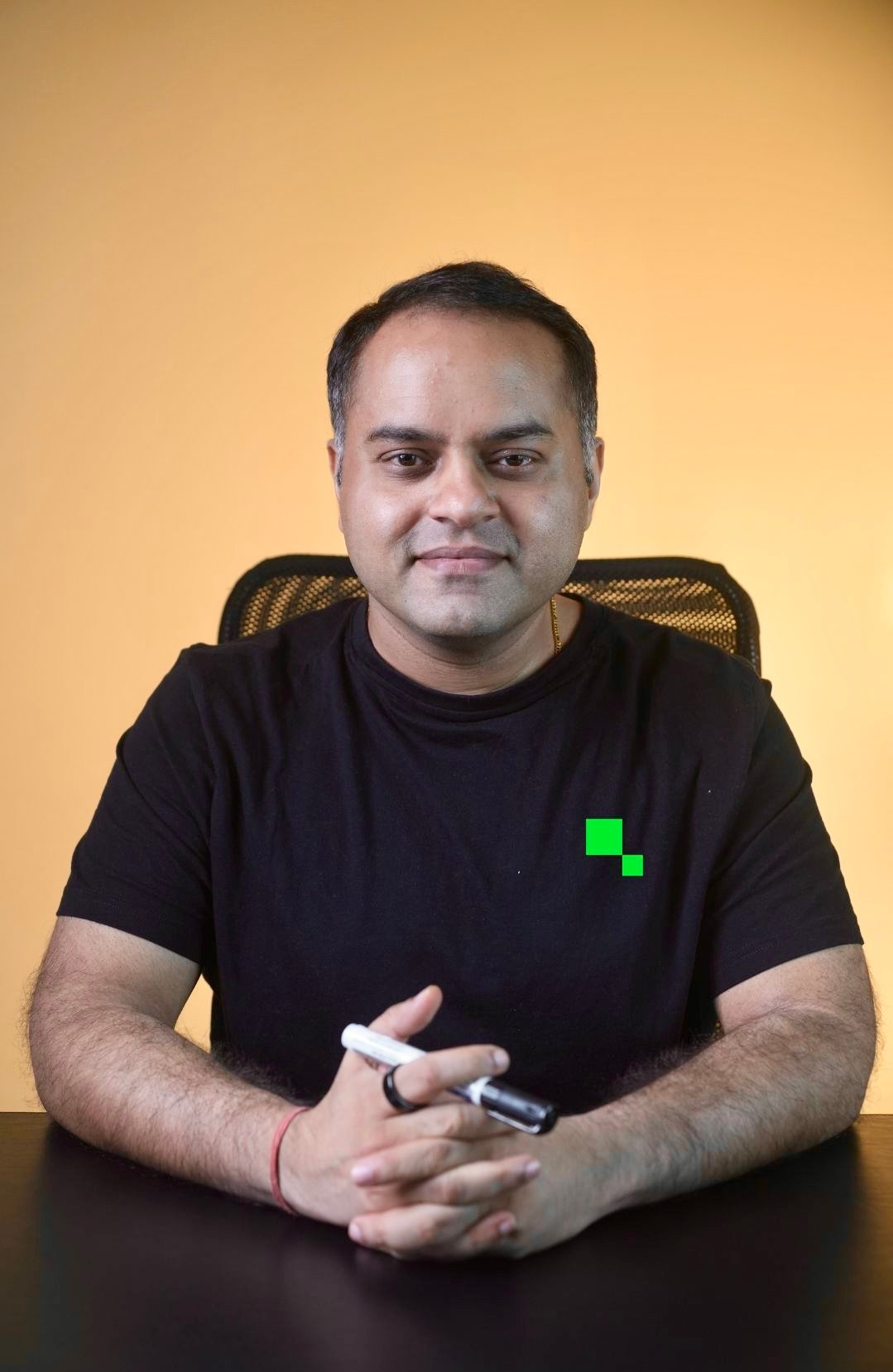
Apurv Singh
Founder, HQ Digital. Ex-Times Internet, Ex-Future Group. TEDx Speaker. Consultant to Godrej Properties, Reliance Brands, Aditya Birla Group.
Performance marketing is a results-driven approach to digital advertising where you pay for outcomes, not reach or impressions. The fundamental principle: if the desired action does not happen, you do not pay. This shifts the risk from advertiser to platform or publisher, and it is the only form of marketing where every rupee is accountable before the invoice arrives.
The term is used loosely to mean “running Meta or Google Ads.” That is not what it means. Performance marketing is the entire strategic system: the business economics that determine what you can afford to spend, the channel architecture that decides where you spend, the creative system that makes the spend convert, and the measurement infrastructure that tells you whether it is working.
Every business on digital faces one of two challenges, and the mistake most make is trying to solve the wrong one first.
Challenge 1
Efficiency
Low ROAS. High CAC. Every rupee in is not coming back at the expected ratio. The campaigns run but the economics do not work. This is the more common problem.
Challenge 2
Scale
Good ROAS at Rs.50K, falls apart at Rs.3L. The brand wants 2x orders but cannot understand why unit economics deteriorate as budget grows.
Practitioner Note
Most businesses trying to solve a scale challenge end up creating an efficiency challenge. They increase budget, Meta exhausts the high-intent audience, conversion rates fall, CAC rises, and they conclude that “Meta stopped working.” Meta did not stop working. The economics of scale kicked in. The channel was never broken. The expectation was wrong.
And performance marketing cannot save a business in survival mode. If your contribution margin per order is negative, if your product is unvalidated, or if your repeat purchase rate sits below 20%, performance marketing will accelerate losses, not growth. Fix the fundamentals before you scale the spend.
From the Finance Literacy for Marketers Masterclass
I have sat in boardrooms where a brand celebrates 4x ROAS while their CM2 (Contribution Margin 2) per order is negative. The ads are technically performing. The business is structurally losing money on every transaction. This happens because most marketers are trained to optimise ROAS and have never been asked to open the P&L. Understanding contribution margin is what separates a performance marketer from a performance architect.
How performance marketing evolved: the 3 eras
Understanding where we came from explains why what worked in 2018 fails completely in 2026.
ERA 1 – Pre-2015 Media Buying Era
The human was the algorithm. Media buyers manually controlled who saw which ad, on which placement, at what time. Audience targeting was the core skill. The person who knew how to layer interest and demographic signals outperformed everyone else. Expertise meant platform knowledge and manual control.
ERA 2 – 2015 to 2022 Algorithmic Era – The Lookalike Age
Lookalike audiences changed everything. You gave the platform your best customers, and it found more people like them. The skill shifted from targeting to seeding. Who you put into the seed audience determined the quality of the lookalike. Most performance marketers in this era became audience architects. The creative mattered less. The data input mattered more.
ERA 3 – 2023 Now Signal Economy – Current Reality
Advantage Plus killed the Lookalike Age. The platform no longer needs your seed audience. It finds buyers across the entire population using behavioural signals. Audience targeting is no longer your moat. Your competitive advantage is now the quality of signals you feed the algorithm: creative quality, conversion data accuracy, event signal completeness, and organic engagement strength.
The performance marketer’s job changed completely. You are no longer an audience architect. You are a signal engineer. The brands winning in 2026 feed the algorithm better than their competitors do. That is the entire game.
From the Masterclass
The days of controlling every aspect of an ad are over. Performance marketing has moved from a control economy to a signal economy. Success now depends on providing the right signals to the platform’s AI systems: cost signals, creative signals, retention signals, efficiency funnel signals. The platform finds the audience. Your job is to feed it better inputs than your competitor does.
Most brands treat performance marketing as “running Meta Ads.” The real architecture has four channels that work in a specific order, at specific budget ratios. This framework is what I use across every client, from D2C startups to Fortune 500 consulting engagements.
40-50%
Marketplaces
Amazon, Flipkart, Myntra, Nykaa. Validate your product here first. Marketplace audiences are in buying mode. If your product does not convert here, paid social will not fix it. Budget priority 1 for all new brands.
25-30%
Organic Content
Instagram, YouTube, SEO. Content creates desire. Almost no business struggles with performance marketing once they have figured out their content. Build this before scaling paid. Organic permanently lowers your blended CAC.
20%
Paid Advertising
Meta Ads, Google Ads. Paid captures demand, it does not create it. For new brands, paid should warm audiences, not convert cold traffic. Most brands over-invest here before organic and marketplace are ready.
10%
Retention
Email, WhatsApp, SMS, push. The most underleveraged channel in Indian D2C. A 5-email post-purchase sequence increases repeat rate by 15-25%. Retention improves CAC without touching your ads at all.
Why this order matters
Brands that start with paid and skip marketplaces and organic are spending to convert cold audiences with no social proof, no repeat data, and no validated product-market fit. They pay the highest possible CAC for the lowest possible confidence. The 4-Channel Framework builds proof before it builds spend. Validate. Build. Then scale.
Learn This Framework Live
Dream Performance Marketing Masterclass
10 sessions. $50M+ in ad spend distilled into a framework. Used by brands across India, UAE, USA, and Australia.
4.8 rating 10,000+ marketers trained 15 hours of content
Seven channels. Each with a distinct funnel role, distinct success conditions, and a distinct cost of getting them wrong.
Meta Ads (Facebook and Instagram)
Best for: demand generation, impulse conversion, visual storytelling
Meta works at Rs.50,000 per month. It still works at Rs.2 lakhs. Then somewhere between Rs.3 and Rs.5 lakhs, ROAS starts compressing, and the agency says you need better creatives. You make better creatives. The ROAS recovers for two weeks and compresses again. The diagnosis is almost never the creatives. In most cases it is one of three things: the repeat rate is too low to support the CAC at scale, the attribution is broken so the algorithm is optimising on bad data, or the campaign structure is fragmenting the algorithm’s learning across too many ad sets.
The 3C Creative Framework, every ad must qualify on all three simultaneously
C1
Context
Platform, placement, audience stage (top, mid, or bottom funnel)
CTA, offer, urgency signal, visual hook that pushes immediate action
A creative that fails any one of the three will drag the entire campaign regardless of targeting. Our internal data shows non-AI creatives outperforming AI-generated ones by 2x CTR for direct sales. AI creatives work for engagement. For conversion, human-made content with the 3C framework wins.
Google Search Ads
Best for: bottom-funnel conversions, intent-driven purchase moments
Google Search is the only channel where the user tells you exactly what they want. That intent signal is valuable, and expensive, because every competitor knows this. For global brands scaling in the US, UK, and UAE, Search competition is fierce but conversion quality is highest. Brands like Amazon and Spotify use Search to capture demand already created by brand investment.
For D2C brands building new categories, where the customer does not yet know your product exists, Search has limited demand to capture. You create demand with Meta and content, then capture it with Search. Running Search without demand creation means fighting a small pool at a high CPC.
YouTube
Best for: top-of-funnel awareness, category creation, brand building
YouTube is the most misused channel in D2C performance marketing. Brands treat it like Meta, running short conversion-oriented ads and measuring by direct ROAS. YouTube success is not a targeting problem. It is a content problem. The video must work first. Targeting is secondary.
For brands serious about reducing long-term CAC, YouTube is essential. A 3-6 month horizon is the minimum before measurement makes sense. Brands that pull YouTube budget after 30 days because the ROAS is low are measuring the wrong outcome entirely.
Retention: Email, WhatsApp, SMS, Push
Most underleveraged channel in D2C globally
Retention is not a marketing channel. It is a business economics lever. Every improvement in repeat rate reduces the effective CAC across your entire acquisition spend. If a customer buys three times instead of once, your acquisition cost per rupee of revenue drops by 67% without touching your ad account.
For new and growing brands, tools like OmniSend or Brevo handle email and WhatsApp automation well. At scale, Klaviyo, MoEngage, or CleverTap give you the segmentation depth to run cohort-based retention properly.
Benchmark for low-AOV D2C brands
A healthy 12-month repeat purchase rate is 35-45%. Below 20% is a structural problem that must be fixed before scaling paid acquisition. You are pouring customers into a leaky bucket.
Affiliate and Influencer
Best for: credibility building, micro-community penetration
The model has shifted from mass influencers to micro-communities. A creator with 50,000 highly engaged followers in your specific niche delivers more qualified traffic than a celebrity with 5 million indifferent ones. Virality does not get you sales. A creator with 500 engaged, loyal followers in your exact niche is worth more than 500,000 passive impressions. The question is not reach. It is trust density.
Metrics that matter vs metrics that lie
The dashboard shows you what the platform wants you to optimise. These are the numbers that determine whether the business is viable.
Metric
Formula
India D2C Benchmark
Why it matters
MER / Blended ROAS
Total Revenue / Total Ad Spend
2.5x to 3.5x
The only ROAS that correlates with actual profitability. Platform ROAS is the platform’s best guess, not reality.
Break-even ROAS
1 / Gross Margin %
Category-specific
Any campaign below this destroys margin regardless of what the dashboard shows. Know this number before setting any target.
CAC (Loaded)
Total Spend + Team + Tools / New Customers
Less than 33% of LTV
Dashboard CAC excludes creative cost, team cost, tool cost. True loaded CAC is 20-40% higher than what Meta reports.
LTV:CAC Ratio
12-month LTV / CAC
3:1 minimum
Below 2:1, the business is likely unprofitable at scale. Below 1:1, you are paying to destroy the business.
CM2 Per Order
Revenue – COGS – Shipping – Returns – Ad Spend
Positive, always
Boards celebrating 4x ROAS while CM2 is negative. The ads work. The business does not. CM2 is the truth.
Repeat Purchase Rate
Repeat Customers / Total Customers (12M)
35-45% (low AOV D2C)
High repeat rate = low effective CAC = more room to scale paid. Most underleveraged lever in the business.
Performance marketing benchmarks by market
Reference ranges based on HQ Digital client work across India, UAE, and USA. Industry-specific. Not platform averages.
Industry
India MER
UAE MER
USA MER
Typical CPL (USD)
Key Variable
D2C (Fashion/Jewellery)
2.5x – 3.5x
2.0x – 3.0x
1.8x – 2.8x
$8 – $25
AOV and repeat rate define viability
D2C (Skincare/Supplements)
3.0x – 4.5x
2.5x – 3.5x
2.0x – 3.5x
$10 – $30
Subscription conversion is the key multiplier
Real Estate
8x – 20x
12x – 30x
15x – 40x
$40 – $120
High CPL justified by single transaction value
Healthcare / Med-Tech
N/A
N/A
$18 – $60 CPL
$18 – $60
CRO on booking flow is where most revenue is lost
Education / Coaching
4x – 8x
5x – 10x
6x – 12x
$25 – $80
Webinar/lead magnet funnel quality determines CAC
B2B / Consulting
6x – 15x
8x – 18x
10x – 25x
$70 – $120
LinkedIn CPL is 2.5x Meta but lead quality is higher
India
Lower CPMs, higher competition at scale. Marketplace validation (Amazon/Flipkart) reduces paid risk before Meta spend. Repeat rate and prepaid ratio are the two numbers that determine whether paid can scale.
UAE and GCC
Higher AOV categories perform well (luxury, real estate, premium services). English and Arabic creative split required. Google Search CPCs are 2-4x India rates. LTV per customer is substantially higher across most categories.
USA
Geo-modified search terms outperform broad national terms in most categories. CPMs on Meta are 3-5x India rates. Healthcare CPL ranges $18-$60. CAPI implementation is critical as iOS privacy changes have the strongest impact in US traffic.
Practitioner note on global benchmarks
These ranges are what I actually see across client accounts, not what platforms publish. The gap between a Tier 1 (US/UK) and Tier 3 (India/SE Asia) market on paid CPL is roughly 4x. Which means a healthcare brand spending $50 per lead in the US would expect the equivalent effort to cost around $12-15 in India. That cost differential does not mean India is “easier.” It means the purchasing intent signal is different, the competition density is different, and the margin structure must be modelled accordingly.
Apurv Singh, HQ Digital. Benchmarks from active client accounts across India, UAE, USA, and Australia.
Why attribution is broken in 2026
Attribution, tracking the entire user journey before a purchase, is in 2026 fundamentally broken. Privacy changes by Apple and Android have made cross-device, cross-channel tracking unreliable. Platform ROAS is the platform’s best guess at what it influenced, not what actually happened. The businesses that spend big on digital are increasingly moving to incrementality: moving the needle from 100 orders a week to 110, and using CM2 in the P&L to measure real impact. The MER replaces multi-touch attribution for most brands. Total revenue divided by total spend. Simple. Honest. Correlates with profitability.
Know your floor before setting any campaign targets. Every campaign running below break-even ROAS is destroying margin regardless of what the dashboard shows.
Currency:
Your ROAS
3.00x
Break-even ROAS
1.82x
Status
Profitable
Your ROAS of 3.00x is above your break-even of 1.82x. You have 1.18x of headroom. Margin is being generated at this spend level.
The Dream Performance Marketing Masterclass covers the exact financial frameworks, diagnostic process, and campaign structures to fix both efficiency and scale challenges.
Performance marketing vs brand marketing: the real relationship
“Content creates desire. Ads capture demand.”
Apurv Singh, Dubai Podcast with Peter Cardoz
Every brand I have worked with that plateaued on Meta had the same root cause. They were running performance marketing without brand marketing, treating paid ads as the demand engine rather than the demand capture engine.
Here is what actually happens. Brand marketing builds awareness and desire. It makes people want your product before they see an ad. Performance marketing then captures that desire efficiently. The more desire you have created through organic channels, the lower your CPMs, the higher your CTR, and the better your conversion rate on paid.
Running performance marketing without brand investment is like running a tap with no water in the pipe. You get some results from existing demand in the market, but the ceiling is low and the cost is high. Brands that invest in content, YouTube, Instagram, SEO, see their Meta ROAS improve over time even without changing their ad accounts.
Brand Marketing
Creates desire and awareness
Long-term horizon (3 to 12 months)
Not directly attributable to a sale
Lowers your paid CAC over time
Builds pricing power and loyalty
SEO, content, organic social, PR
Performance Marketing
Captures existing demand
Short-term horizon (days to weeks)
Directly measurable and attributable
Stops the moment you stop spending
Scales what already converts
Meta, Google, affiliate, retargeting
Case studies: India and USA
Real work. Real numbers. No case studies written for a portfolio.
India – D2C Jewellery
Swashaa Jewellery
70%
Prepaid ratio
from 50%
90%
Delivery rate
from 75%
The problem when we started was not the ad account. The prepaid ratio was low, which was hitting delivery efficiency and contribution margin simultaneously. Low prepaid means higher RTO (return to origin) risk, which means your effective cost per delivered order is much higher than your reported CAC. We restructured the payment flow, CRM sequences, and post-purchase experience before touching the ads.
Prepaid ratio went from 50% to 70%. Delivery rates moved from 75% to 90%. These two numbers alone changed the economics of every paid campaign. The founder, Bhaavan Ramani, also got the headspace to think beyond daily operations, which is the real unlock at this stage of business.
“
HQ Digital didn’t just improve our numbers. They gave me the headspace to think beyond daily operations. Prepaid ratio up from 50% to 70%. Delivery rates from 75% to 90%. Not a single collaboration challenge in all these months. That’s rare.
Bhaavan Ramani
Founder, Swashaa Jewellery
India – Luxury Handloom
Kashmkari
5x
Revenue growth
Kashmkari came in with declining sales and no clear performance marketing foundation. The approach was to build the 4-channel system from the ground up: marketplace presence, a content strategy that could generate organic desire, a paid structure built on validated demand, and a retention layer. The sales recovered and then grew 5x, with partners and agencies brought in strategically to accelerate the trajectory.
“
He didn’t just create a solid marketing plan; he also helped us put it into action effectively. With his assistance, we partnered with talented individuals and agencies, leading our sales to not only recover but also grow 5x, and they’re still growing rapidly.
Hamees Naseer
Founder, Kashmkari
USA – Healthcare / Med-Tech
GastroDoxs
15-Day
Performance Diagnostic Sprint
The 15-Day Performance Diagnostic Sprint is a structured audit of a brand’s entire performance marketing ecosystem, covering business economics, funnel architecture, signal quality, creative system, campaign structure, and measurement. For GastroDoxs, a US healthcare brand, the sprint identified the exact bottlenecks in their patient acquisition funnel and delivered a prioritised action plan.
“
Extremely detailed, pain-point relevant, and a useful audit sprint. We are looking forward to working on the action points.
Dr. Vinitha Pothuri, GastroDoxs, USA
Also in the USA portfolio
Working with Junglee Drinks on performance marketing strategy and D2C growth architecture for the US market. Applying the same 4-channel framework to a market where marketplace validation runs through Amazon US and paid channels operate at significantly higher CPMs than India.
USA – Healthcare – 15-Day Diagnostic Sprint
CRO Insights: GastroDoxs
0.1%
Traffic to appointment conversion rate
The 15-Day Diagnostic Sprint for GastroDoxs (Houston, Texas) surfaced a pattern common to most healthcare and service businesses operating at scale: traffic is not the problem. The website had 70,000 monthly visitors, which is 6-7x higher than competitors in the area. The problem was a 0.1% traffic-to-appointment conversion rate. The site was built to educate patients, not to book them.
The funnel reality
70,000 monthly visitors 49% bounce immediately 35,000 engaged users 24% return more than once 14% reach a provider page (benchmark: 20%) 0.1% make an appointment
Root cause
Website built for information, not bookings No bottom-funnel condition pages Schema markup missing across key pages 6.09M AI platform queries for GI conditions not captured 154,000 search queries with near-zero traffic on key pages
The CRO framework applied
A website converts on three levers: trust (does the patient trust this provider?), comfort (can they evaluate and compare?), and conversion path clarity (is the booking journey frictionless from wherever they land?). Most healthcare websites fail the third. The booking CTA is present, but patients reach it from top-of-funnel informational pages where purchase intent is low, not from bottom-funnel condition-specific or location-specific pages where intent is high.
The proposed model: national authority content (condition guides, GERD, IBS, colonoscopy prep) acts as the discovery engine and builds domain authority. Location pages and geo-modified procedure pages handle the actual conversion. The patient discovers you through content, and the booking path is embedded within it. They never need to do a separate search to find you.
Extremely detailed, pain-point relevant, and a useful audit sprint. We are looking forward to working on the action points.
Dr. Vinitha Pothuri
GastroDoxs, Houston TX, USA
What clients and peers say
From Fortune 500 teams to founders building their first D2C brand.
“Apurv is a silent force. His clarity of thought is reflected in the manner that he distills complex digital topics and explains them clearly, so that it can be understood even by laymen. He is business savvy and is an astute negotiator.”
Raunaq Sharma
Lead Customer Strategy, Aditya Birla Group
“Apurv is one of the best performance marketers I have worked with. He is very focused about ROI and generating business. He is a quick learner and applies his learning on a day to day basis. That makes him stand apart from others.”
“The one aspect that stands out is his willingness to always move out of his comfort zone and take up new challenges. To say he is an asset to any organization he works for will be selling him short. He is indeed much more than that.”
KK
Kewal Kotian
Founder and CEO, Leafbud
“Thank you for the wonderful insights Apurv and for being so patient with all our questions.”
AK
Altaf Khan
Learning and Leadership Specialist, Reliance Brands
“This was indeed an eye opener for a lot of us. Trust me the way things are changing we need you every three months.”
AT
Ashish Tripathi
Luxury Retail Leader, driving growth for Armani, BOSS and HUGO at RBL
Watch: The 4-Channel Growth Framework explained
Dubai Podcast with Peter Cardoz
The 4-channel growth system, content vs ads, and what most D2C brands get wrong
Click to watch on YouTube (32 min)
Free performance marketing tools
Built from the same frameworks taught in the masterclass. Use these to diagnose before you spend.
Performance marketing is a results-driven approach to digital advertising where you pay for outcomes: clicks, leads, sales, not for reach or impressions. The moment you stop paying, results stop. That is its strength and its constraint. Every rupee in performance marketing is accountable before the invoice arrives.
Is performance marketing the same as digital marketing?
No. Digital marketing is a broad category that includes SEO, content marketing, social media, email, and paid advertising. Performance marketing is specifically the paid, results-driven subset where payment is tied to defined outcomes. All performance marketing is digital marketing, but not all digital marketing is performance marketing.
What is a good ROAS for performance marketing?
The right ROAS depends entirely on your gross margin. Break-even ROAS = 1 divided by your gross margin percentage. At 50% gross margin, your break-even is 2x. For most Indian D2C brands, a healthy blended ROAS (MER) of 2.5x-3.5x indicates a sustainable operation. Use the calculator above to find your specific floor. For US and global brands, the same formula applies but benchmark ROAS expectations vary by category.
When should a brand not use performance marketing?
Performance marketing will not save a business in survival mode. If your contribution margin per order is negative, your product is unvalidated, or your repeat purchase rate is below 20%, performance marketing will accelerate losses, not growth. Validate on marketplaces first. Build organic demand. Then scale paid. This is the sequence the 4-Channel Framework is built around.
What is MER and why does it matter more than ROAS?
MER (Marketing Efficiency Ratio) equals Total Revenue divided by Total Marketing Spend across all channels. Unlike platform ROAS, MER accounts for all attribution including organic assists, view-through conversions, and cross-channel journeys. It is the metric that actually correlates with business profitability. Platform ROAS can show 4x while your P&L shows a negative CM2. MER closes that gap.
How much budget do I need to start performance marketing?
For Meta Ads, a minimum of Rs.50,000/month is needed for the algorithm to gather meaningful data. Below this, the learning phase takes too long. A practical starting point for a D2C brand is Rs.1-2L/month across Meta and Google, with 70% on Meta and 30% on Google. For US brands, the same principles apply but CPMs and CPCs are significantly higher, so budget requirements scale accordingly.
Should I hire an agency or build in-house?
Small businesses should never outsource their marketing strategy to an agency. The business owner or an internal team member must hold the strategy. Use an agency as an execution arm only. An agency’s top talent works on their biggest accounts. If you are a small brand, you are being managed by a junior. The strategy must live inside your business, in someone who understands your product, your customer, and your unit economics.
What is the difference between performance marketing and brand marketing?
Content creates desire. Ads capture demand. Brand marketing builds the desire: it shapes perception, creates affinity, makes people want what you sell. Performance marketing captures the demand that brand marketing has already created. Running performance marketing without brand investment is like running a tap with no water in the pipe. You need both, in the right proportion for your brand’s stage.
12+ years building performance marketing systems across Times Internet and Future Group, and then consulting for 50+ brands including Godrej Properties, Reliance Brands, Aditya Birla Group, and D2C brands across India, UAE, and the USA. Built organic and paid channels from zero across multiple markets. Creator of the Dream Performance Marketing Masterclass, trained 10,000+ marketers. BSc Biotech turned MBA Marketing turned performance marketing practitioner. Based in Mumbai, India.
10 sessions. 15 hours. $50M+ in ad spend distilled into one system. The exact frameworks used across Godrej Properties, Reliance Brands, and 50+ D2C brands globally. Signal-based marketing, the 3C creative framework, campaign structure, attribution, and the unit economics of scaling.
Please note: This action will also remove this member from your connections and send a report to the site admin.
Please allow a few minutes for this process to complete.