Strategic Marketing Budget Forecaster
Plan your ad budget like a strategist. Not like a gambler.
This tool forecasts your required ad spend, expected sales, and revenue across Google, Meta, and LinkedIn, based on your lead targets, funnel conversion rates, and selling price.
Built for lead-gen businesses. Real estate, consulting, coaching, B2B services, education.
Free for up to 3 forecasts per session. No login required.
Forecast Your Paid Growth Plan
Enter your lead target and business context. Get a channel-wise budget plan and a blended forecast.
Strategic Budget Calculator
Complete Performance Marketing Forecaster
🔒 Unlock Unlimited Access
You've used all 3 free calculations. Login or create an account to continue using the Strategic Budget Calculator without limits!
Login / Create AccountYou can run this forecast up to 3 times per session.
To run unlimited scenarios and save your planning versions,
How to plan a marketing budget
Start with your revenue goal, divide by Average Order Value (AOV) to get required sales. Divide sales by conversion rate to get required traffic. Multiply traffic by CPC to get the budget.
WHAT THIS CALCULATOR IS
This is not a ROAS calculator.
This is not “how much should I spend on ads” guesswork.
This is a strategic budget simulator that answers:
- If I need X leads/month, how much budget should I plan?
- Which channel looks best if I went all-in on it?
- What happens in a realistic blended mix across platforms?
- Is my funnel the problem, or is my channel mix the problem?
It’s a planner, a forecaster, and a sanity-check in one.
THE PROBLEM THIS FORECASTOR SOLVES
Most brands plan budgets in reverse:
- “We can spend ₹X, so let’s try.”
- “Competitor spends ₹Y, so we should too.”
- “Agency says increase budget.”
That’s not planning. That’s hoping.
A real plan starts with:
- lead target
- funnel conversion reality
- selling price
- cost per lead benchmarks
- platform mix strategy
This tool forces clarity before you burn money.
WHAT THIS FORECASTOR ACTUALLY DOES
This tool converts your growth intent into a measurable forecast:This tool converts your email fundamentals into an asset valuation.or converts budget ambition into operational reality.
It helps you:
- Estimate required spend for a target number of leads
- Compare Google vs Meta vs LinkedIn economics side-by-side
- Understand whether your funnel conversion makes the model viable
- Build a realistic channel mix plan instead of choosing one “favorite” platform
- Get a performance grade that indicates scalability risk
This isn’t “budget advice”. It’s budget math.
HOW THE FORECAST LOGIC WORKS
Everything here is explicit logic. No black box.
Step 1. Build a Base CPL Benchmark
The calculator estimates a baseline cost per lead using:
- Industry Benchmark × Region Cost Factor × Business Vintage × Pricing Tier × Seasonality
This produces a realistic starting CPL based on context
Step 2. Apply Platform Cost Behavior
Each platform behaves differently, so CPL is adjusted using standard multipliers:
- Google: high intent, higher CPL (1.0×)
- Meta: volume, lower CPL (0.6×)
- LinkedIn: premium B2B audience, highest CPL (2.5×)
You can override these with your real CPL numbers if available.
Step 3. Model Conversion Rates from Your Funnel
The base conversion rate is calculated from your funnel:
- Lead → Qualified % × Qualified → Sale % = Base Lead-to-Sale %
- Then platform quality adjusts this:
- Google: higher intent (1.2×)
- Meta: lower intent (0.7×)
- LinkedIn: higher quality (1.4×)
You can override conversion rates per platform if you have actual data.No guessing. No platform averages.
Step 4. Forecast Sales, Revenue, and ROAS
Using your ASP:
- Estimated sales = Leads × Conversion Rate
- Estimated revenue = Sales × ASP
- ROAS = Revenue ÷ Spend
This is calculated per platform and for the blended mix.
Step 5. Blended Mix Forecast
The tool forecasts a default mix designed to capture different intent layers:
- 40% Google + 40% Meta + 20% LinkedIn
- You get:
- Total spend
- Total estimated sales
- Total revenue
- Blended ROAS
- A grade that reflects risk and scalability
Step 4. Strategy Recommendation Engine
The tool then outputs a recommendation based on what wins:
- Scale Meta if it’s the best ROAS engine
- Dominate Google if intent economics win
- Focus LinkedIn if premium B2B efficiency wins
- Flag funnel issues if every channel fails
- Otherwise recommend a balanced ecosystem mix
This is the most useful part for decision-making. And this Strategy Framework is Built on HQDigial’s internal thinking models and experiences of managing campaigns across industries, categories and geographies.
WHO THIS FORECASTOR IS FOR
Built for:
- Real estate lead gen teams
- Consultants and high-ticket service businesses
- Coaches and info product sellers
- B2B services and SaaS teams
- Education businesses running lead funnels
If your business runs on lead pipelines, this is a real planning tool.
WHO THIS IS NOT FOR
Not for:
- Pure DTC “buy now” businesses (use the pricing/ROAS calculators instead)
- Teams who don’t track lead quality or closed-won data
- People looking for exact predictions without any funnel numbers
This is forecasting. It will be as accurate as your inputs. But it will always be directionally correct.
FREE VS LOGGED-IN ACCESS
Free Access
- Run up to 3 forecasts per session
- See channel economics and blended outcomes
- Get a grade and recommendation instantly
Logged-In Access (Free Account)
- Unlimited forecasts
- Save versions by month, season, or campaign
- Compare regions and pricing tiers
- Store real CPL and CR benchmarks per channel
- Access future planning tools
WANT HELP TURNING THIS PLAN INTO EXECUTION?
This tool gives you the numbers.
Execution still needs judgment:
What should my landing page change to lift lead-to-sale?
How do I improve lead quality on Meta without killing volume?
How do I build an ABM system if LinkedIn is the winner?
How do I set up tracking so these conversion rates are real?
That’s what HQ Club is for.
HQ CLUB MEMBERSHIP
HQ Club. The strategy layer above the calculator.
HQ Club members get:
- Access to all calculators and planning tools
- Ability to ask questions and get feedback on your exact funnel
- Channel mix reviews and troubleshooting
- Templates for lead qualification, CRM hygiene, and reporting
worth 357$
worth 510$
worth 255$
worth 170$
204$
worth 136$
worth 102$
worth 128$
worth 85$
Priceless
(Google, Meta, SEO, GA4)
This is for operators who want outcomes, not dashboards.
RELATED PRODUCTS YOU MAY FIND USEFUL
If you care about lead economics and forecasting, you’ll likely want:
- On-Demand Courses
- Performance marketing fundamentals for lead gen
- Funnel conversion and landing page optimization
- CRM and pipeline tracking basics
- Live Programs
- Deep-dive masterclasses
- Hands-on diagnostic workshops
- Campaign structure and scaling challenges
Everything connects: forecast → execute → diagnose → scale.
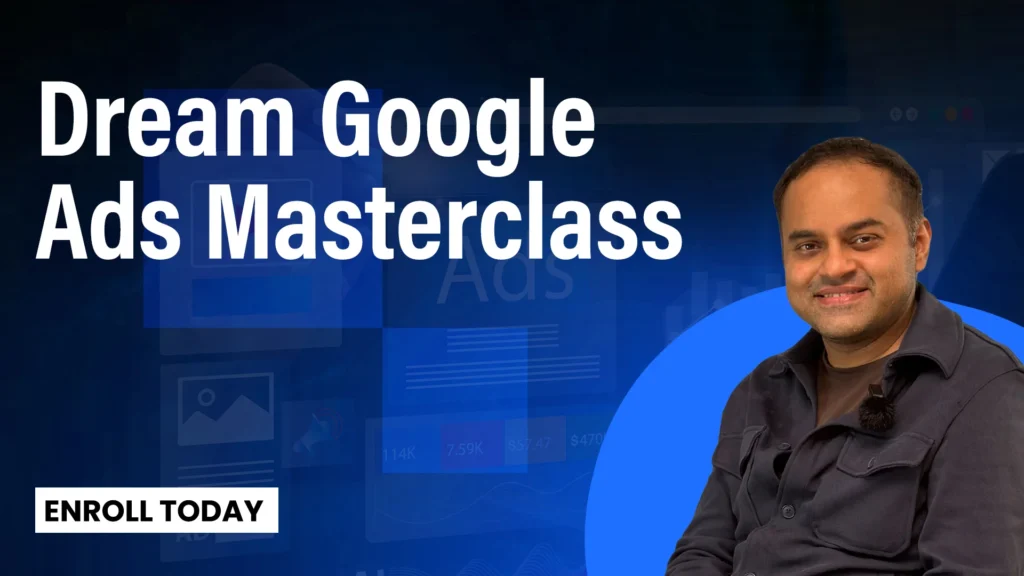
The most in-depth Masterclass on Google ads. Learn Fundamentals + Automation + Scale in one go.
Master Meta Ads, Google Ads, SEO, and GA 4 with a single integrated program built for modern marketers.
The most in-depth Masterclass on Google ads. Learn Fundamentals + Automation + Scale in one go.
Master Meta Ads, Google Ads, SEO, and GA 4 with a single integrated program built for modern marketers.
The most complete Masterclass on Performacne Marketing, top rated, fully updated.
Batch Starts- 6 Dec 2025
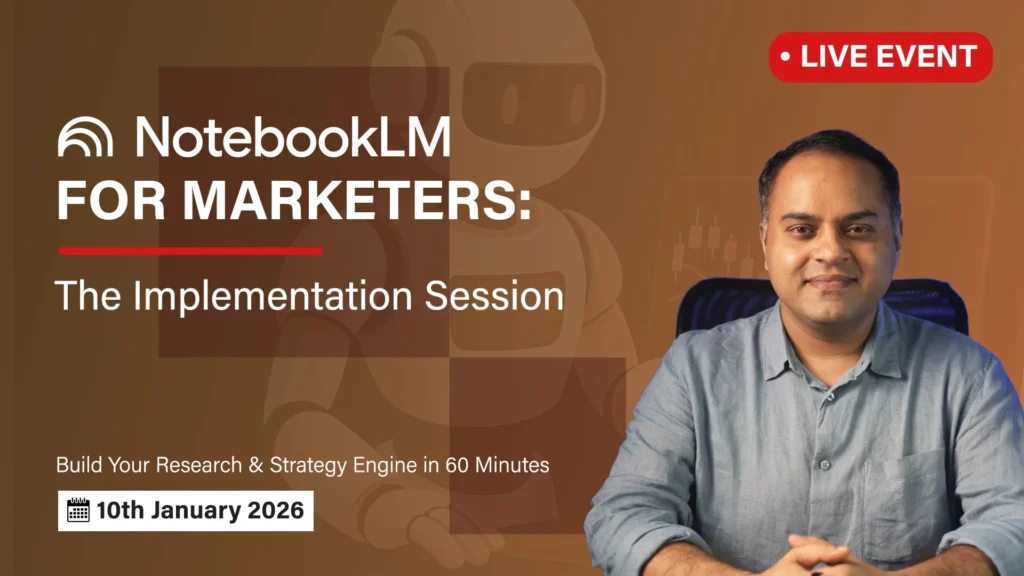
Event Date- 10th Jan 2026
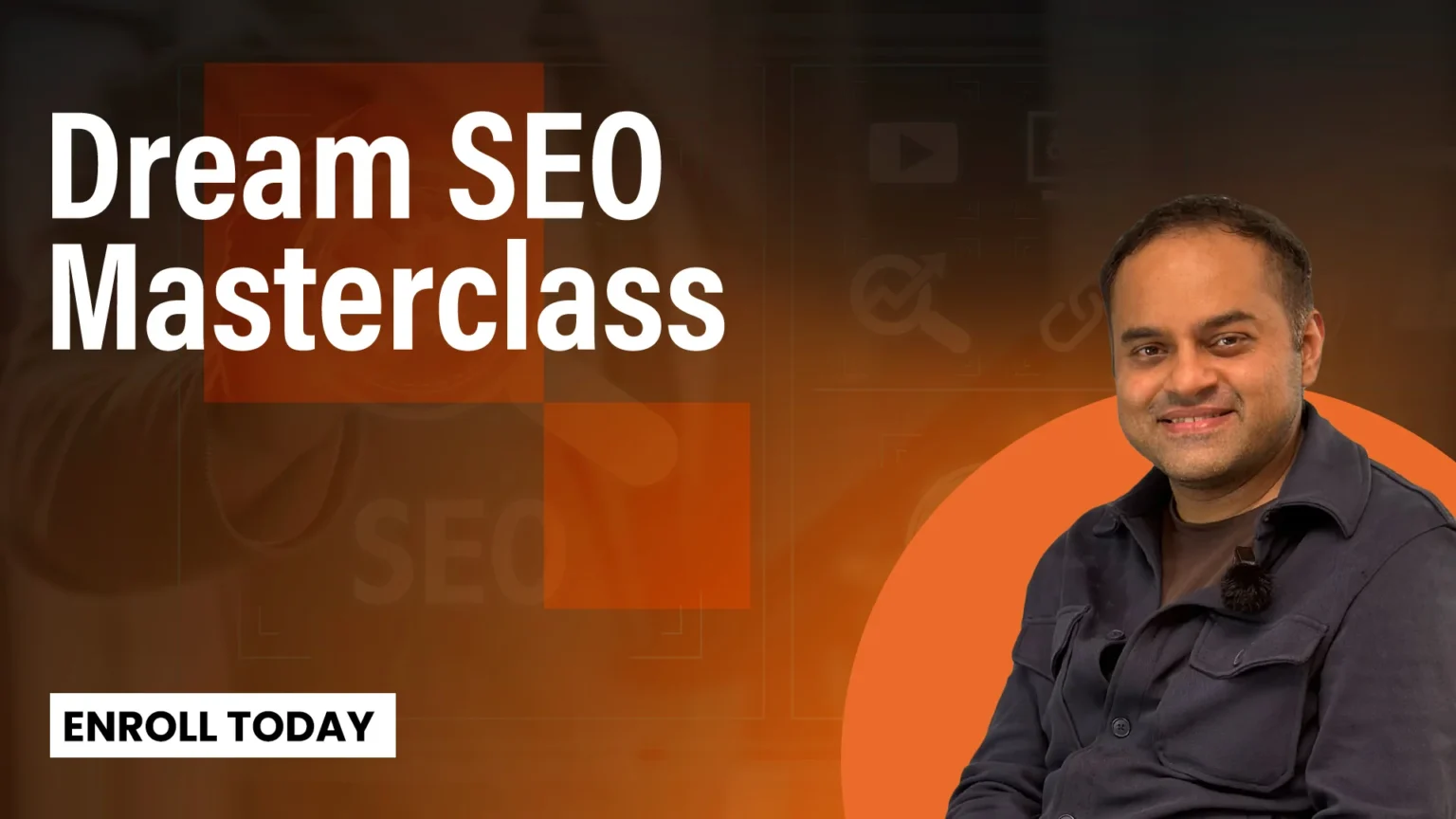
Learn end-to-end SEO, with LLMs, PPA, AEO, GEO optimisations. Best for beginner to advanced learning.Icons- Rating- 4.73/5, No-upsells, SEO..
Batch Starts- 17th Feb 2026
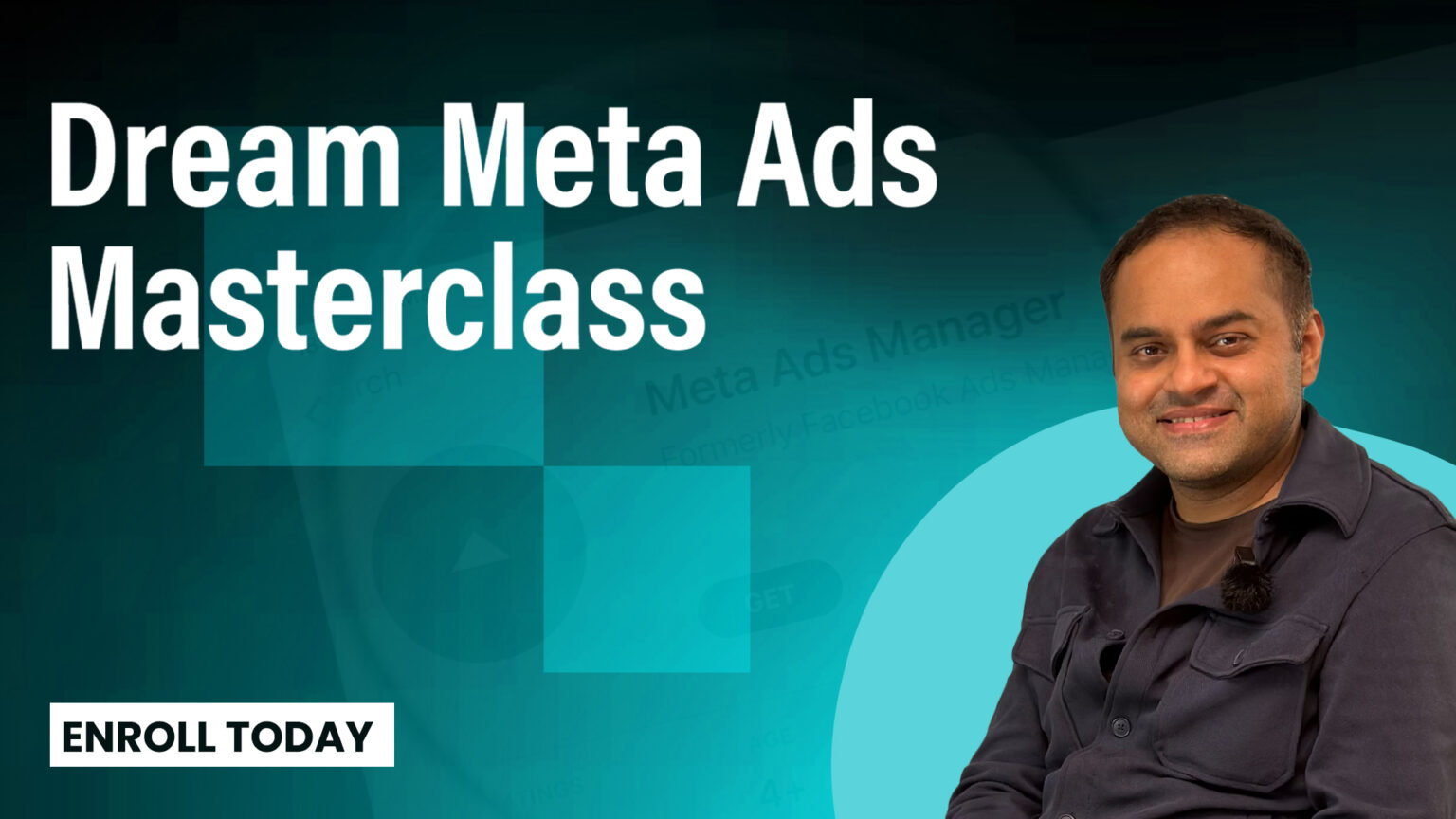
The most in-depth Masterclass on Meta ads. Learn Fundamentals + Automation + Scale in one go.
Batch Starts- 17th Jan 2026
Stop pricing emotionally.
Start pricing with intent.
- Use the calculator.
- See the math.
- Decide with confidence.
Stop Pricing Based on Your Competitors. It Is Killing Your Business.
Most founders price their products randomly. Or worse, they look at a competitor, match the price, and hope for the best.
This is a trap. Your competitor might have lower shipping costs, better payment terms, or a massive organic audience that allows them to survive on lower margins. You do not.
Pricing is not just math. It is strategy. It dictates your “Math of Survival.”
below to find the price that aligns with your specific growth stage—whether you are a venture-backed brand chasing market share or a bootstrapped creator maximizing cash flow.
The Logic: How to Price for Your Specific "Growth Engine"
This tool is different from a standard profit margin calculator because it accounts for your business model. In D2C, one size does not fit all. You must choose one of three engines.
The High Growth Engine (Scale at All Costs)
This is for brands that want to win market share aggressively. You are likely VC-backed or have distribution channels like Quick Commerce/Offline retail
- The Strategy: You accept lower net margins to fuel high ad spend.
- The Goal: Acquire maximum users now. Profit comes later via LTV (Lifetime Value).
- The Pricing Approach: You need an aggressive entry-level price (Good Tier) to lower the barrier to entry. Your ads drive traffic to this "Gateway Product" to build your ecosystem.
The Balanced Engine (The Standard)
This is the most common path. You want to scale, but you cannot burn cash indefinitely.
- The Strategy: A healthy mix of Paid Ads and Organic content.
- The Trap: Most brands start here but eventually ignore organic community building and become over-reliant on paid ads.
- The Pricing Approach: You focus on bestsellers. You maintain a break-even ROAS that keeps the funnel fed without starving your cash flow.
The High Profit Engine (Audience First)
This strategy is for founders who build distribution before they launch a product. You have spent months or years building an audience on LinkedIn, Instagram, or YouTube.
- The Strategy: You use "Brand Pull" to sell. Ads are used only for amplification, not survival.
- The Reality: Growth starts slow. But once the network effect kicks in, profitability is massive because your CAC (Customer Acquisition Cost) is near zero.
- The Pricing Approach: Because you have already built trust, you don't always need a cheap entry product. You can launch directly with a "Better" or "Best" tier product. Your audience is past the "fence-sitting" stage—they are ready to buy.
The Good, Better, Best Framework
- The "Good" (Entry Level): This is your customer acquisition tool. It is priced to convert cold traffic. If you are in High Growth mode, this is your weapon.
- The "Better" (Target): The balance of features and margin. This is where you want most customers to land eventually.
- The "Best" (Anchor): The VIP option.
- Note: If you are running a High Profit/Audience-First engine, you can often skip the "Good" tier and sell the "Best" tier immediately. Cold traffic requires cheap entry points; warm audiences buy value.
Frequently Asked Questions (FAQ)
How do I calculate the selling price with margin?
Do not just markup your manufacturing cost. You must factor in “Landed COGS” (Manufacturing + Shipping to Warehouse), Outbound Shipping (to the customer), Payment Processor Fees (Stripe/Razorpay), and your estimated CPA (Cost Per Acquisition). Our calculator above does this automatically.
What is a good break-even ROAS?
Your Break-Even ROAS is the return you need on ad spend just to pay your bills. If your product costs $40 and you sell it for $100, you have $60 left. If you spend $60 on ads to get that sale, your Break-Even ROAS is 1.66 ($100/$60). You make $0 profit. You need to aim higher than your break-even to scale.
Should I price my product lower to beat competitors?
Rarely. Lowering prices reduces your margin, which reduces the money you can spend on marketing. If you cannot afford to market your product, you cannot sell it. It is often better to raise prices and use the extra margin to fund better creative and distribution.
Stop spending based on gut feel.
- Start spending based on a forecast.
- Run the Strategic Budget Forecastor.
- See your channel economics.
- Then choose your plan with clarity.