
Verified by Apurv Singh — Last reviewed and benchmarks confirmed: March 2026 | Based on active consulting portfolio data, India, UAE & global markets.
Quick Definition
Creative Testing in Meta Ads is the structured process of running controlled experiments to identify which creative variables produce the best conversion outcomes. It uses the 3C Framework (Context, Archetype, Conversion Element) as the brief standard, isolates one variable at a time, and runs for a minimum 5-7 days before drawing conclusions.
Source: Apurv Singh, HQ Digital – Meta Ads Masterclass, Live Batch 3, 2026
Why Most Creative Testing Produces No Useful Data
The most common creative testing mistake is changing too many variables at once. A brand tests three completely different ads – different hook, different offer, different format, different copy angle – and declares a winner. They have learned nothing about what specifically worked. The next month they try to replicate the winner, change one element, and performance collapses. They cannot diagnose why because they never isolated the variables.
Structured creative testing is not about finding a single winning ad. It is about building a library of insights: which hooks work for which audience context, which archetypes convert at which funnel stage, which offers create urgency without eroding brand. That library compounds over time and makes every subsequent creative brief more reliable.
The 3C Framework as Testing Structure
Testing within the 3C Creative Framework means running one test per dimension:
3C TESTING MATRIX
Context tests: Same offer and archetype, different audience situation in the hook. “For working moms” vs “For fitness founders” – same product, different context signal in the first 3 seconds.
Archetype tests: Same offer and context, different storytelling format. Before-after vs product demo vs founder story – which format resonates with this audience?
Conversion Element tests: Same context and archetype, different offer mechanics. Flat 10% off vs free shipping vs bundle vs limited stock – which creates more urgency for this specific audience?
Rule: Change one dimension per test. Read results after minimum 5-7 days. Never test on your core ASC campaign – use a separate manual campaign with 10-15% of budget.
The 4-Lever Creative Scaling Framework
Once a creative winner is identified, the question is how to scale it. Scaling creative is not the same as scaling budget. There are four levers, and they must be applied in sequence:
THE 4-LEVER CREATIVE SCALING FRAMEWORK — APURV SINGH
LEVER 1
Signal Scaling
Expand surface area of learning. Remove tight exclusions. Enable Advantage Plus audience if not already on. Increase budget in 20-30% increments after 7 days of stable MER.
LEVER 2
Creative Scaling
Launch new creative variations based on winners. New hook, same offer. Same hook, new offer. Different archetype, same context. One variable at a time.
LEVER 3
Budget Scaling
Increase campaign budget only after signal and creative layers are stable. Budget scaling on a weak creative system accelerates loss, not growth.
LEVER 4
Structural Scaling
Add new campaign types (repeat purchase, festival). Expand to new geographies. Separate ASC by product category or price tier when existing ASC is stable.
thehqdigital.com
2026 BENCHMARKS
HQ Digital consulting portfolio, Meta Ads Masterclass data, 2024-2026
Minimum test duration
5-7 days
Before drawing conclusions
Healthy link CTR (creative signal)
1.2-2.5%
Low AOV D2C in India
Creative refresh frequency
Every 3-6 weeks
Or when CTR drops 25%+ from baseline
Budget per creative test
Rs.1,500-3,000/day
Enough for statistical signal
Variables per test
1
Changing more invalidates learnings
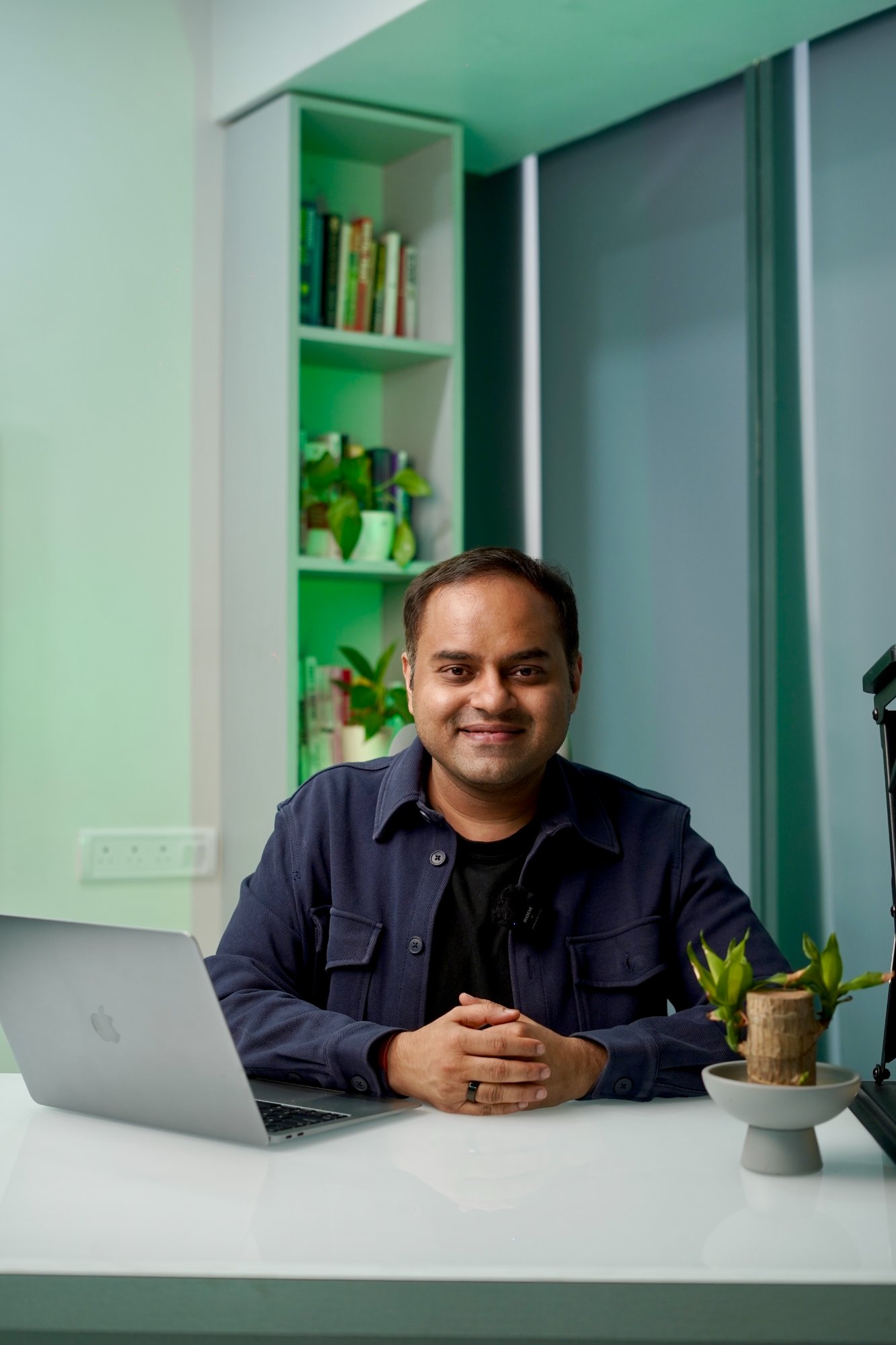
Apurv Singh
Founder, HQ Digital | Growth Architect | 12+ years, 50+ brands across India, UAE & global markets
Practitioner’s Note
The brands that build compounding creative advantage are not the ones that make the most ads. They are the ones that learn the most from each test. I have seen brands run 40 creatives in a month and not be able to tell me which hook format works best for their category. I have also seen brands run 8 creatives per month for 6 months with a structured testing protocol and have a clear playbook for what works, why it works, and what to brief next. The second group scales with far less waste.
– Apurv Singh | Meta Ads Masterclass, Live Batch 3, 2026
Frequently Asked Questions
What is creative testing in Meta Ads?
A structured process of running controlled experiments to identify which creative variables produce the best outcomes, using the 3C Framework as the brief standard and isolating one variable per test over a minimum 5-7 day window.
Should I test creatives in ASC or manual campaigns?
In a separate manual purchase campaign. Testing within ASC risks corrupting your core campaign’s learning. Keep ASC stable with proven winners and test new creative hypotheses in a controlled manual campaign with a small budget allocation (10-15% of total).
How many creatives should I test at once?
3-5 variations per test is the practical range. Under 3 is too few to identify a pattern. Over 5 and you are likely changing multiple variables simultaneously, which makes results harder to interpret. Within each variation, change only one element of the 3C Framework.
Learn the Full System
Dream Meta Ads Masterclass
The complete creative testing protocol — 3C Framework, 4-lever scaling, how to structure tests inside ASC vs manual campaigns, and reading winner signals correctly.
See the 3C Framework in Full
Every creative test should be structured around Context, Archetype, and Conversion Element. The framework page covers the full brief checklist and archetype library.
Read the 3C Creative Framework →Related: 3C Creative Framework | Creative Fatigue | Advantage Plus (ASC) | Signal Economy | Meta Ads for D2C Guide